Paris, France
Paris: City of Light, City of Access
Paris is a city of contrasts for wheelchair travelers. The good news is extraordinary: wheelchair users receive VIP treatment at nearly every major attraction with skip-the-line access and free admission (including a companion). The Louvre gives wheelchair users exclusive access to a completely empty viewing area in front of the Mona Lisa. The Eiffel Tower, Arc de Triomphe, and Musée d'Orsay all have elevator access and priority entry. The sidewalks in central Paris are mostly smooth with good curb cuts, and all buses have wheelchair ramps. The bad news: the Paris Metro is almost entirely inaccessible. Only Line 14 is fully step-free, and most of the other 300+ stations have no elevator. The Metro dates to 1900 and will never be fully accessible due to its underground architecture. Plan to use buses, trams, and accessible taxis instead.
Getting Around
From the Airport
Both Charles de Gaulle (CDG) and Orly airports are accessible. Book a wheelchair-accessible transfer in advance — Bolt and Uber offer accessible vehicle options but availability can be inconsistent. G7 Access taxis are the most reliable option. The RER B train from CDG is technically accessible but requires staff assistance for ramps, and the service can be unreliable.
Metro — The Big Challenge
The Paris Metro is largely unusable for wheelchair users. Only Line 14 (from Saint-Lazare to Olympiades) is fully step-free, with elevators at every station and level boarding. Line 14 fortunately serves many tourist areas including the Louvre, the Grands Magasins shopping district, Bercy, and connects to major train stations. A handful of stations on other lines have elevators, but these frequently break down.
⚠️ Metro Reality Check
Don't plan your trip around the Metro. Even stations listed as "accessible" may have broken elevators, large platform gaps, or require staff assistance that isn't always available. Use the RATP app to check elevator status in real-time before any Metro journey.
Buses — Your Best Friend
All Paris bus routes are wheelchair accessible with lowering ramps at the center door. Buses are clean, frequent, and cover the entire city. Wheelchair users often ride free in practice. Download the RATP app for route planning — select "routes accessible for persons with reduced mobility." Buses are the primary way wheelchair users get around Paris.
Trams
All Paris tram lines are 100% wheelchair accessible with level boarding from the platform. No assistance needed. The tram network serves the outer areas of Paris and is excellent.
G7 Accessible Taxis
G7 has expanded their fleet of wheelchair-accessible taxis significantly. Download the G7 app to book rides. Book at least a few hours in advance for the best availability — on-demand booking results in longer waits. Drivers are trained in wheelchair securing. This is the most reliable accessible taxi option in Paris.
Streets & Sidewalks
Central Paris and the Right Bank (around the Louvre, Champs-Élysées, Marais) have smooth, wide sidewalks with good curb cuts. Paris is mostly flat. Exceptions: Montmartre has extremely steep hills and stairs (use the accessible funicular to reach Sacré-Cœur). The Latin Quarter on the Left Bank has some cobblestones and steeper gradients. Budget double the time Google Maps suggests — Paris traffic and crowded sidewalks slow things down significantly.
Major Attractions
🌟 VIP Treatment
Paris treats wheelchair users like royalty at every major attraction. With a disability card or visible wheelchair, you skip the entire line, get free admission (plus one companion free), and staff will personally escort you. This applies at the Eiffel Tower, Louvre, Arc de Triomphe, Musée d'Orsay, Versailles, and more. Always go to the front of any line and find a staff member.
🏛️ The Louvre
Eighteen elevators and twenty wheelchair lifts make 95% of the museum step-free. Enter via the Rue de Rivoli shopping center entrance (elevator to the pyramid courtyard) and go to the front of the line. Wheelchair users get exclusive access to a roped-off area directly in front of the Mona Lisa — often completely empty. Pick up an accessibility map at the info desk. Free admission for disabled visitors plus one companion.
🗼 Eiffel Tower
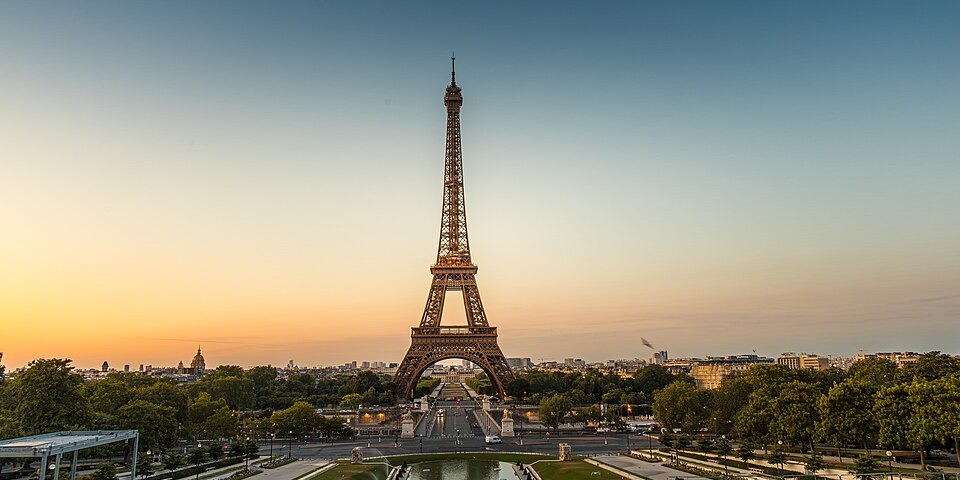
Elevators provide access to the first and second floors. Priority entry for wheelchair users — skip the line. Accessible restrooms on the lower levels. The summit (top floor) requires climbing additional stairs and is not wheelchair accessible. Free admission for disabled visitors. The Trocadéro esplanade across the river has the best accessible viewpoint.
🏛️ Arc de Triomphe
Fully accessible as of 2025 — elevators connect the entrance to the rooftop terrace with its spectacular panoramic views. Adapted restrooms and priority entry. Received the official Tourisme & Handicap accessibility label. The underground passage from the Champs-Élysées has elevator access.
🎨 Musée d'Orsay
Housed in a former train station with spacious galleries. Fully wheelchair accessible with elevators to all levels. Free admission for disabled visitors and companion. Wheelchairs available to borrow. The Impressionist galleries on the upper level are reached by elevator.
⛪ Notre-Dame Cathedral
Notre-Dame reopened after its 2019 fire with improved accessibility features. The ground floor of the cathedral is accessible. Check current access details as improvements continue.
⛪ Sacré-Cœur (Montmartre)
Montmartre is a steep hill with 300+ steps. The funicular railway from the base to the summit is wheelchair accessible and avoids the stairs entirely. The basilica interior is accessible once you reach the top. The narrow, hilly streets of Montmartre itself are very challenging for wheelchair users.
🏰 Palace of Versailles
The main palace is largely accessible with elevators between floors. The Hall of Mirrors and State Apartments have flat access. The gardens are extensive but paved paths are available. Wheelchair loan available. Free admission for disabled visitors and companion. Take the RER C train (request ramp assistance) or book an accessible taxi.
Best Neighborhoods
📍 1st-2nd Arrondissements (Louvre / Les Halles)
The area around the Louvre and Tuileries Garden has the smoothest, widest sidewalks in Paris. Flat terrain, excellent bus connections, and Metro Line 14 accessible at Pyramides and Châtelet. The Tuileries Garden has paved paths suitable for wheelchairs. Many accessible hotels.
📍 7th Arrondissement (Eiffel Tower / Invalides)
Home to the Eiffel Tower, Musée d'Orsay, and Les Invalides. Wide boulevards with smooth sidewalks. Flat terrain. The Champ de Mars park in front of the Eiffel Tower has paved paths. Well-served by accessible bus routes.
📍 4th Arrondissement (Le Marais)
A trendy, historic neighborhood with charming streets. The main streets are smooth and manageable, though some smaller side streets have uneven surfaces. Home to Place des Vosges (Paris's oldest planned square, flat and accessible). Excellent food and shopping scene.
📍 8th Arrondissement (Champs-Élysées)
The grand Champs-Élysées boulevard is wide, flat, and smooth — one of the most wheelchair-friendly streets in Paris. The Arc de Triomphe is at the top, and luxury shopping and dining line the avenue. Good Metro Line 14 connection at nearby stations.
Practical Tips
⚠️ Pickpockets
Pickpocketing is extremely common in Paris, and wheelchair users with bags hanging on their chairs are targets. Keep valuables in inner compartments with zippers, never in external pockets or dangling bags. Be especially vigilant in crowds at tourist sites and on buses.
🚻 Accessible Restrooms
Paris has modernized its public self-cleaning "sanisette" toilets — they're free, wheelchair accessible, and some include changing tables. Look for them throughout the city. Major museums and attractions all have accessible restrooms.
⏰ Time Management
Paris traffic is chaotic and sidewalks are crowded. If Google Maps says 30 minutes, budget at least an hour. Crossing streets requires vigilance — cars and bikes often run lights. The city rewards a slower pace — linger at a café terrace, watch the world go by, and don't try to cram too many attractions into one day.
🚢 Seine River Cruises
Multiple companies offer wheelchair-accessible Seine cruises, including Bateaux Mouches and Vedettes du Pont Neuf. A river cruise at sunset is one of the most magical Paris experiences — you'll see Notre-Dame, the Eiffel Tower, and the Louvre all from the water. Check accessibility details with each operator before booking.
- RATP Wheelchair Guide (ratp.fr) — Official transit accessibility guide with downloadable maps in English
- Jaccede (jaccede.com) — Crowdsourced app with real-time accessibility reports for Paris locations
- Sage Traveling Paris — Accessible tours, hotels, and detailed attraction guides
- WheelchairTravel.org Paris Guide — Independent reviews of attractions, hotels, and transit
- G7 Access Taxis — Wheelchair-accessible taxi fleet with app booking
Terrain & Surface Guide
🪨 Surfaces
Central Paris sidewalks are mostly smooth stone or concrete — much better than Rome or Prague. The main boulevards (Champs-Élysées, Boulevard Haussmann, Boulevard Saint-Germain) are wide and well-maintained. Some older Left Bank streets near the Latin Quarter have uneven surfaces. Montmartre has cobblestones and extremely steep grades — use the accessible funicular. The Marais has mostly smooth, flat streets.
📏 Distances
Louvre to Eiffel Tower: 1.9 mi (3 km, along the Seine, flat). Louvre to Notre-Dame: 0.93 mi (1.5 km, flat along the river). Eiffel Tower to Arc de Triomphe: 1.6 mi (2.5 km). Musée d'Orsay to Louvre: 0.62 mi (1 km, along the Seine). Paris is walkable/rollable between many attractions — but distances add up. Use the bus system between distant sites.
🚶 Step Counts
Eiffel Tower summit: 674 steps from ground (elevators to 2nd floor accessible, summit has additional stairs). Arc de Triomphe: Elevator to rooftop terrace (fully accessible as of 2025). Sacré-Cœur: 300 steps from the base (use the accessible funicular). Pantheon dome: 206 steps (not accessible). Notre-Dame towers: 387 steps (not accessible). Musée d'Orsay: Elevators throughout — zero steps needed. Louvre: 18 elevators and 20 lifts — zero steps needed.
💡 The Tuileries Garden Trick
The flat, paved Tuileries Garden connects the Louvre to Place de la Concorde (and the Champs-Élysées beyond). This creates a nearly 2.5 mi (4 km) accessible corridor through the heart of Paris — Louvre → Tuileries → Concorde → Champs-Élysées → Arc de Triomphe. Benches and cafés throughout.
Sensory & Non-Mobility Access
Visual Impairment
👁️ Touch & Audio
The Louvre has a dedicated tactile gallery where blind visitors can touch replica sculptures. Audio guides available in 9 languages. The Musée d'Orsay offers touch tours of Impressionist paintings and sculptures. Musée du Quai Branly has an extensive tactile trail. Guide dogs are welcome at all French museums, restaurants, and on all public transport by law. Paris Metro stations have tactile paving at platform edges.
Hearing Impairment
🦻 Hearing Access
The Louvre offers French Sign Language (LSF) guided tours on specific dates. Written guides available in multiple languages at all major museums. The Opéra National de Paris offers surtitled performances. Induction loops are available at some museums and theaters — check individual venues. The Panthéon has a video guide with LSF interpretation.
Sensory Sensitivities
🧠 Calm Alternatives
Paris crowds can be intense at major sites. Quieter alternatives: Musée de l'Orangerie (Monet's Water Lilies in two oval rooms — profoundly calm). Musée Rodin (sculpture garden, peaceful). Sainte-Chapelle (small, stunning stained glass, less crowded than Notre-Dame). Luxembourg Gardens (chairs everywhere, peaceful). Canal Saint-Martin (quiet tree-lined canal with bridges and locks). Visit the Louvre on Wednesday or Friday evenings (open until 9:45 PM) when crowds thin dramatically.
Stamina Planning
🪑 Energy Management
The Louvre is 72,735 square meters — you cannot see it all in one visit. Choose one or two wings (Mona Lisa is in Denon wing). The Vatican-to-Sistine-Chapel route is 0.93 mi (1.5 km) each way with limited seating. Café culture is your friend: Paris sidewalk cafés are everywhere and lingering over coffee is not just acceptable, it's expected. Budget 30-minute café breaks between sites. Parks (Tuileries, Luxembourg, Palais Royal) all have chairs and benches.